Cul-de-sac House Feng Shui: Dead-End Streets Explained
Is a house on a cul-de-sac or dead-end street good feng shui? How form-school principles apply to a straight dead end, a house at the head of the road, and a house wrapped by a turning circle, and what the classical texts do and do not say.
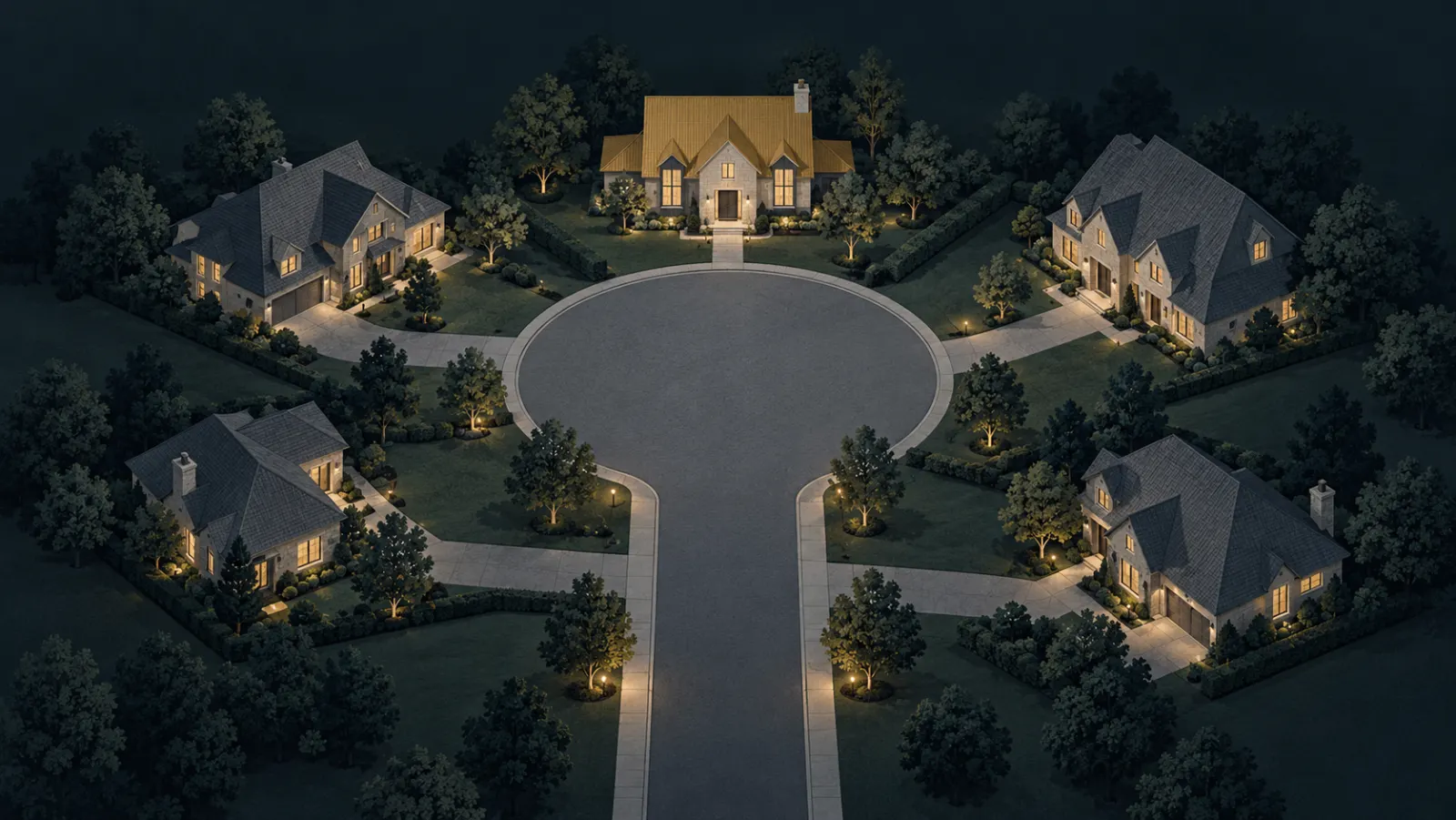
In brief
- ✦The classical feng shui texts have no term for a cul-de-sac. Readers apply two principles they do contain: road rush (路冲) and the embracing curve (玉带).
- ✦A house at the end of a straight dead end, with the road aimed at its door, is read as road rush, usually lighter because traffic is low.
- ✦A house beside a rounded turning circle, wrapped by the curve, is read more like the embracing jade-belt position.
- ✦Houses along the sides of a cul-de-sac, with the road passing alongside, are usually read as neutral on this point.
- ✦The modern claim that a dead end 'traps' or 'blocks' qi is a contemporary reading, not one found in the classical texts we hold.
Three positions on a cul-de-sac
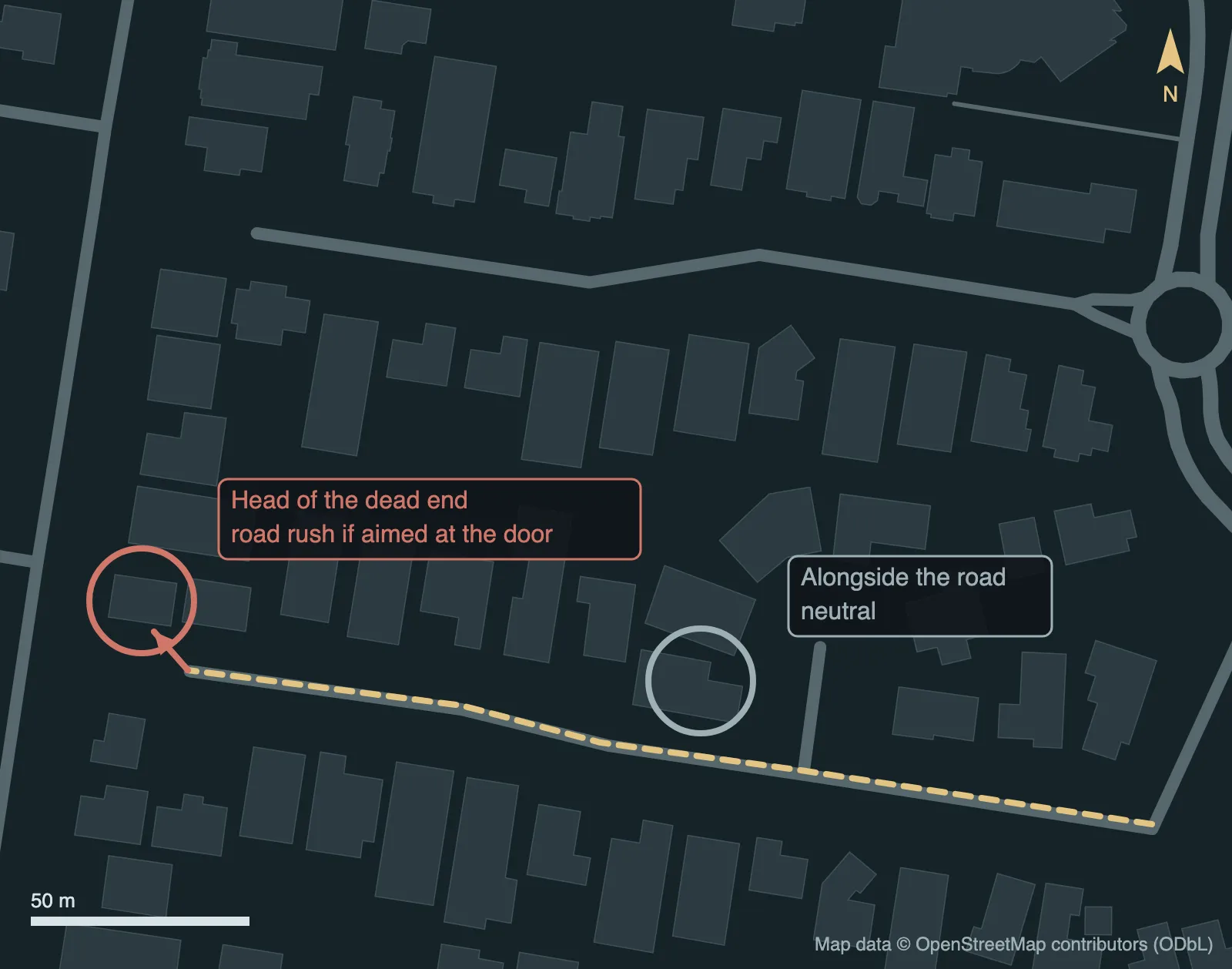
Why a cul-de-sac needs interpreting
Cul-de-sacs are a modern street form, and the classical residential texts were written for villages, walled towns and dense lanes. They do not discuss dead-end streets as a type. What they do discuss in detail is how a road approaches a house: whether it strikes it head-on, passes alongside, or curves around it. A cul-de-sac reading is those principles applied to a new layout, so the answer depends on where in the cul-de-sac the house sits.
Position matters more than the street
Most cul-de-sacs combine a straight stem with a rounded head. The houses on them fall into three positions, and traditional readers treat each differently.
| Position | What the road does | Traditional reading |
|---|---|---|
| At the head of a straight dead end | Runs straight at the front door | Road rush (路冲); lighter than on a through road because traffic is low |
| Around a rounded turning circle | Curves around the front | Close to the embracing jade belt (玉带); generally read favourably |
| Along the sides of the stem | Passes alongside | Neutral on this point; read the other surroundings |
| On the outside of a bend in the stem | Bows away from the house | Reverse bow (反弓); read as unfavourable |
The head of a straight dead end
If the stem of the cul-de-sac is straight and ends at your front door, the classical reading is road rush: the road is aimed at the house. The Ba Zhai Ming Jing calls a street aimed straight at the door unfavourable. On a quiet dead end the traffic is light, so readers usually weigh it less than a T-junction on a busy street, and a front garden, wall or hedge between the road end and the door reduces it further.
The turning circle
Where the end of the cul-de-sac widens into a loop, the houses around it have the road curving in front of them. If a house sits in the hollow of that curve, the arrangement resembles the jade belt, which the classical texts read favourably. If a house sits where the loop bulges toward it, the same reverse-bow caution applies as on any other curved road.
About 'trapped qi'
Some modern feng shui writing says that dead-end streets trap or block qi because the road goes nowhere. That idea is not in the classical texts in our corpus, which judge a road by how it approaches the house rather than by where it leads. Many practitioners see a quiet cul-de-sac as calm and sheltered instead. If you read a strong warning about cul-de-sacs, check which school it comes from.
How to check on a map
In satellite view, follow the stem of the cul-de-sac to the end and see where it points. Note whether your building is at the head, on the loop or along the side, and whether the stem bends on the way. Then confirm on site where the front door is and what stands between it and the road end.
FAQ
Is a cul-de-sac house good or bad feng shui?
It depends on the position. At the head of a straight dead end it is read as road rush; wrapped by a turning circle it is read close to the favourable jade belt; along the sides it is usually neutral.
Do classical feng shui texts mention cul-de-sacs?
No. Readers apply the classical principles of road rush and the embracing curve to cul-de-sac layouts.
Is the house at the end of a cul-de-sac the worst position?
Only if the road runs straight at its door. Even then, low traffic and a screen between road and door make it much lighter than a T-junction on a busy road.
Does a dead end block qi?
That is a modern claim rather than a classical one. Many readers see a quiet cul-de-sac as sheltered.
Classical terms in this guide
Each term page quotes the original classical texts.
Sources and verification
Continue reading
- Feng Shui House-Hunting Checklist: What to Check Outside
- T-Junction House Feng Shui: Road Rush (路冲) Explained
- Reverse-Bow vs Jade-Belt Road: Which Side of the Curve