Living Near Water: Feng Shui of Rivers, Lakes and Canals
What classical feng shui says about a house near water: why water is read as where qi gathers, which positions are favoured (calm water in front, water that embraces the site), which are cautioned (water aimed at the house, water on the outside of a bend, vast open water), and how to check on a map.
In brief
- ✦In form-school feng shui, water marks where qi stops: the Book of Burial says qi scatters on the wind and stops at the boundary of water.
- ✦Calm water in front of a house, within a contained open space, is the classic favourable position.
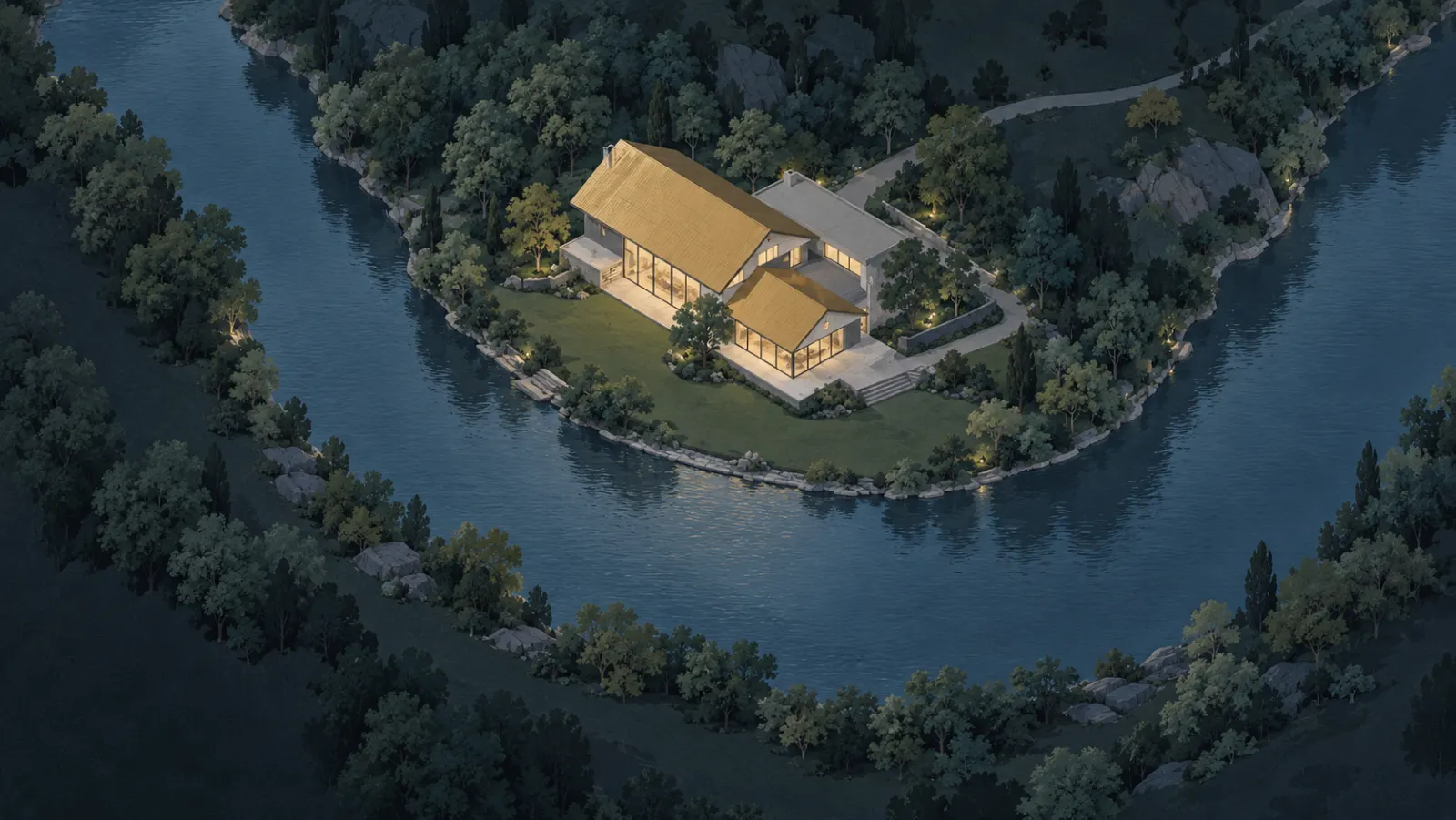
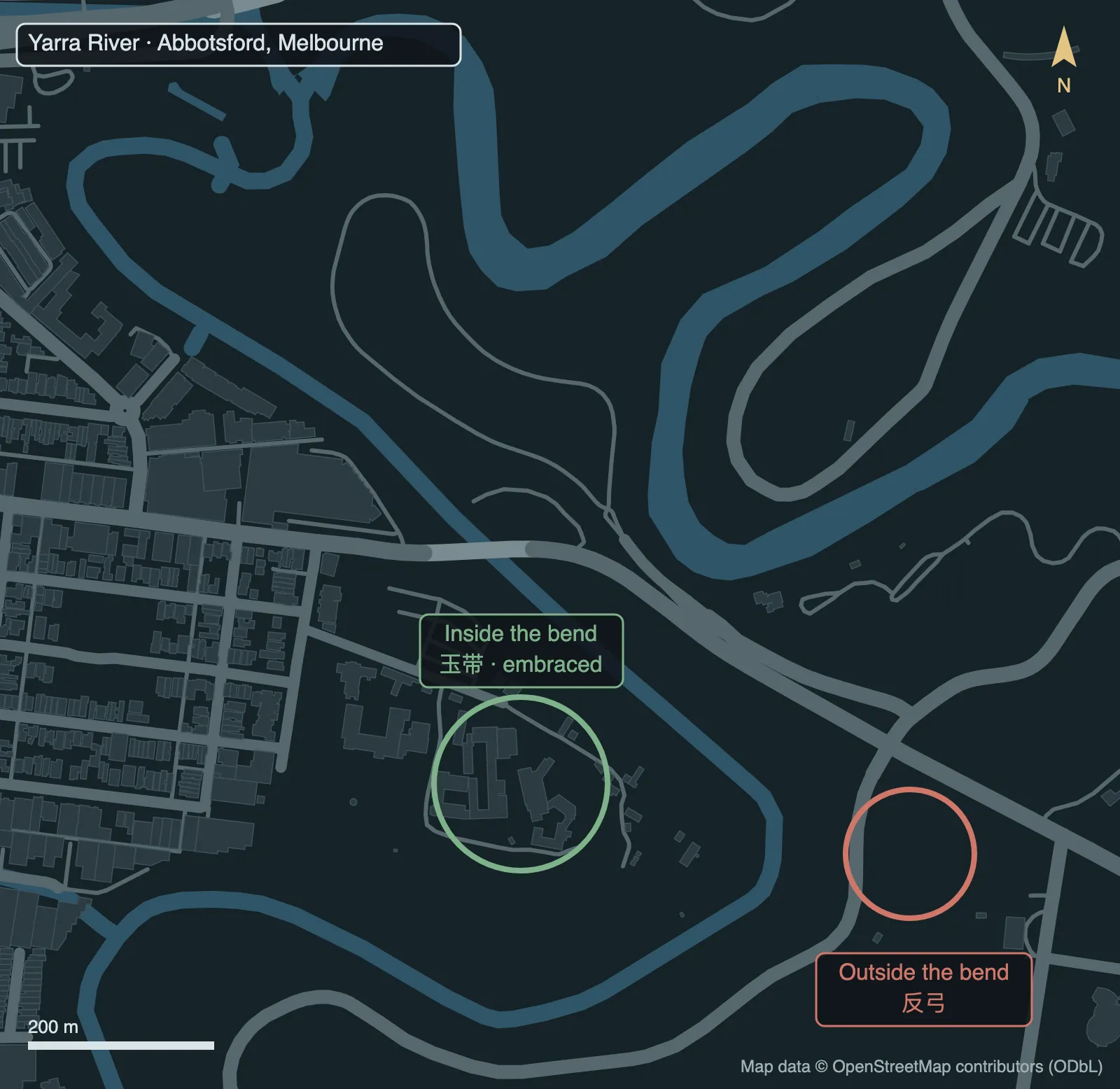
- ✦Water that curves around the site (the jade belt) is read well; water on the outside of a bend (the reverse bow) is read badly.
- ✦A river or canal aimed straight at the house, fast water, and a vast open expanse right in front are among the forms the Qing Zhai Fa Ju Yu lists as unfavourable.
- ✦Flood risk, damp and insurance are practical questions that the feng shui reading does not answer.
Inside and outside a curving river
Why water matters in form school
Feng shui literally means wind and water. The Book of Burial, the founding text of form school, says that qi scatters when it meets the wind and stops when it reaches water, so a good site is sheltered from wind and bounded by water. That makes water one of the main things a traditional reader looks for around a house: where it is, how it moves, and whether it embraces the site or cuts across it.
Favoured and cautioned positions
The classical texts describe water by position and movement. The table gathers the distinctions that come up most often.
| Water | Traditional reading | Why |
|---|---|---|
| Calm water in front, within a contained space | Favourable | Qi gathers in the bright hall (明堂) in front |
| Water curving around the site (玉带) | Favourable | Embraces the house; the Yang Zhai Shi Shu praises jade-belt water at the gate |
| Water on the outside of a bend (反弓) | Unfavourable | Bows away and scatters qi |
| A river or canal aimed straight at the house | Unfavourable | Strikes the site, like road rush |
| Vast open water directly in front | Cautioned | Open with no boundary; the Zhai Fa Ju Yu lists wide rivers and great marshes in front, and glaring reflected light, as unfavourable |
| Water directly behind the house | Cautioned by many readers | The back is meant to be supported by higher, solid ground |
| Fast, noisy water | Cautioned | Qi moves too fast to gather |
Lakes, ponds and harbours
Still water within a contained shape, such as a pond in a park or a sheltered bay, is the form most often praised. A lake large enough that the far shore is lost is read as too open, and strong reflected glare from a large water surface is listed among unfavourable features in the Zhai Fa Ju Yu. A small pond in front of a house is generally read well; the same pond tight against the back wall less so.
Rivers and canals
For moving water, readers ask which way it flows relative to the house, whether the house is inside or outside any bend, and whether a straight reach points at the door. A straight canal aimed at the front of a house is read like a road aimed at it. A river that slows and curves in front of the site is read as the embracing jade belt. The flow direction is also read in more technical schools, which go beyond the form readings here.
How to check on a map
In satellite view, look for water within a few hundred metres: rivers, canals, drains, ponds, lakes and the sea. Note where each sits relative to the front of the building, whether a channel points straight at it, and which side of any bend the building is on. Satellite images can show dry drains as dark lines, so confirm on site whether water is actually present.
Practical questions the reading does not answer
A favourable water position in feng shui says nothing about flood risk, rising damp, mosquitoes or insurance cost, and those can matter more than any traditional reading. Check official flood maps and the property's history before relying on a view of the water as a reason to buy.
FAQ
Is living near water good feng shui?
Often, if the water is calm, in front of the house and within a contained space, or curves around the site. Water aimed at the house, on the outside of a bend, or a vast open expanse right in front is cautioned.
Is water behind a house bad feng shui?
Many readers caution against it, because the back of a house is meant to be supported by higher, solid ground. How strongly depends on distance and what stands between.
Is an ocean view good feng shui?
Classical texts caution against vast, boundless water directly in front and strong glare. A sheltered bay or a view framed by headlands is read better than open ocean at the doorstep.
Does a swimming pool count as water?
Readers apply the same position logic at small scale, but the classical texts discuss natural water. A pool is a minor factor compared with a river or lake.
Classical terms in this guide
Each term page quotes the original classical texts.
Sources and verification
Continue reading
- Feng Shui House-Hunting Checklist: What to Check Outside
- T-Junction House Feng Shui: Road Rush (路冲) Explained
- Reverse-Bow vs Jade-Belt Road: Which Side of the Curve